

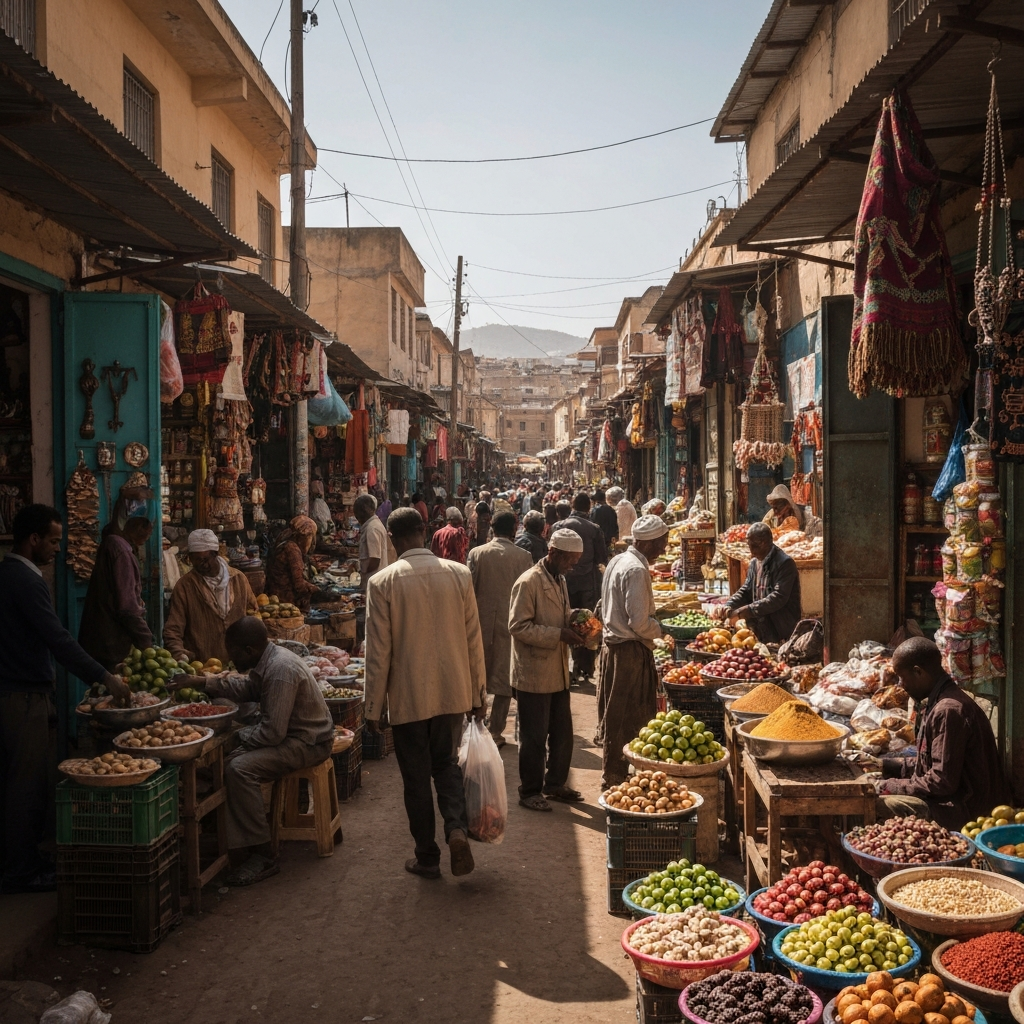
In recent years, Ethiopia has embarked on a series of ambitious economic reforms aimed at stabilizing its economy and fostering sustainable growth. These efforts have been particularly significant in the face of global economic challenges, including trade tensions, fluctuating commodity prices, and tightening financial conditions.
Macroeconomic Reforms and Growth
The Ethiopian government has implemented comprehensive reforms focusing on exchange rate liberalization, fiscal consolidation, and debt restructuring. These measures have led to a rapid improvement in macroeconomic fundamentals, with the International Monetary Fund (IMF) projecting the country’s economy to expand by 7.2% in 2025, positioning Ethiopia among Sub-Saharan Africa’s fastest-growing economies. All sectors—industry, agriculture, and services—are expected to contribute to this growth trajectory. [Source]
Monetary Policy and Inflation Control
To address high inflation rates, the National Bank of Ethiopia (NBE) has adopted a more flexible exchange rate and moved to an interest rate-based monetary policy. These reforms aim to create conditions for high, sustainable growth by addressing acute foreign exchange shortages and inflation. [Source]
External Stability and Debt Management
Ethiopia’s external position has shown signs of improvement, with the current account deficit (excluding official transfers) standing at $991 million from July to December 2025, marking a significant improvement from the $1.8 billion deficit in the same period of the previous year. However, challenges remain, including the need for continued debt restructuring and managing the reliance on gold exports, which constitutes a source of fragility for the country. [Source]
Social Impacts and Poverty Reduction
Despite economic progress, poverty reduction remains a challenge. The UNDP Human Development Index (HDI) for Ethiopia has been stagnant in recent years, and the World Bank forecasts that poverty could rise to 43% by 2025, up from 33% in 2016 when measured at $3 per day in 2021 purchasing power parity (PPP). To mitigate the short-term poverty impacts of macroeconomic reforms, the government has committed to expanding social assistance programs. [Source]
Conclusion
Ethiopia’s economic transformation is a testament to the country’s resilience and commitment to reform. While significant progress has been made, ongoing efforts are required to address remaining challenges and ensure that economic growth translates into improved living standards for all Ethiopians.