

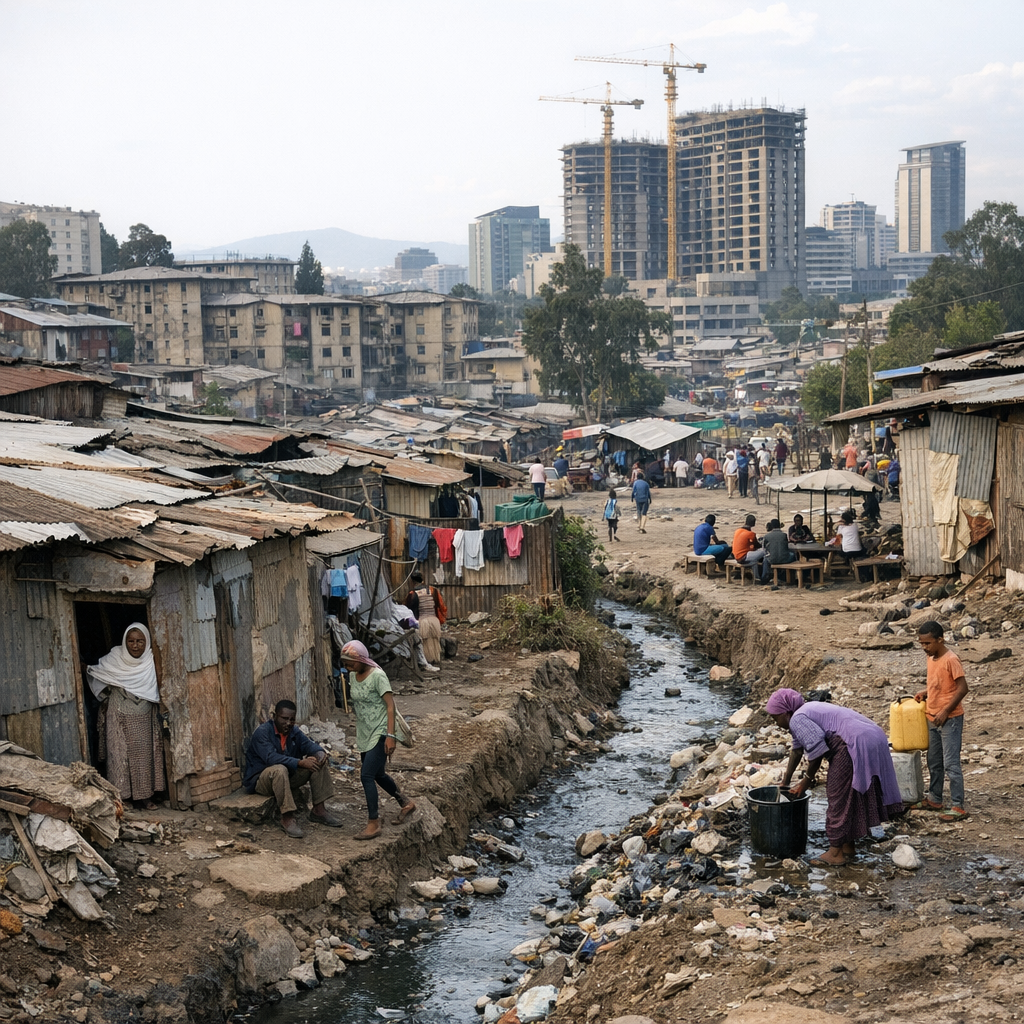
Addis Ababa, Ethiopia’s rapidly growing capital, faces significant urban challenges, notably in housing, sanitation, and public spaces. These issues impact the daily lives of residents and require comprehensive solutions.
Housing Shortages
Over 70% of housing units in Addis Ababa are classified as slums, lacking basic amenities. Additionally, 78% of housing structures are built with non-durable materials, while 76% of residents rely on pit latrines, and only 29% have proper sewer connections. Overcrowding, poor sanitation, and inadequate infrastructure exacerbate public health risks, making housing a crucial challenge. Despite claims of rights violations regarding relocation, 6,915 improved housing units have been provided to relocated individuals in areas like Gelan Gura, Arabsa, Lafto, Gulelle, and Akaki. Additionally, major redevelopment projects like the one in Kazanchis aim to build 13,752 units through public-private partnerships, targeting middle-income residents.
Sanitation Concerns
With a population exceeding 3 million, only 10% of Addis residents are connected to the sewerage system, and an estimated 10% continue to practice open defecation. As a result, in 2007 the Addis Ababa Water Supply and Sewerage Authority (AAWSA) began a pilot to build approximately 200 shared sanitation facilities. After the pilot’s success, AAWSA took the next bold step of aiming to build 3,000 shared sanitation facilities, more than 600 of which have been successfully completed since 2016. These shared sanitation facilities include public facilities serving high-traffic urban areas and communal latrines shared between clusters of households in low-income communities.
Limited Public Spaces
Public spaces are essential for community building, social interaction, and recreation. They provide a place for people to gather, relax, and enjoy the outdoors. Additionally, access to green spaces has been linked to improved physical and mental health. Therefore, the lack of adequate public spaces in this city has a significant negative impact on the well-being of its residents. Public spaces are also insufficient, with only 25 city parks providing limited recreational areas.
Addressing these challenges requires coordinated efforts from government authorities, private sectors, and the community. Sustainable urban planning, investment in infrastructure, and inclusive policies are essential to improve living conditions and ensure a healthier, more livable Addis Ababa for all residents.