

By Solomon Girma
Zeroing in on Waste: Cleaner Rivers and Green Spaces
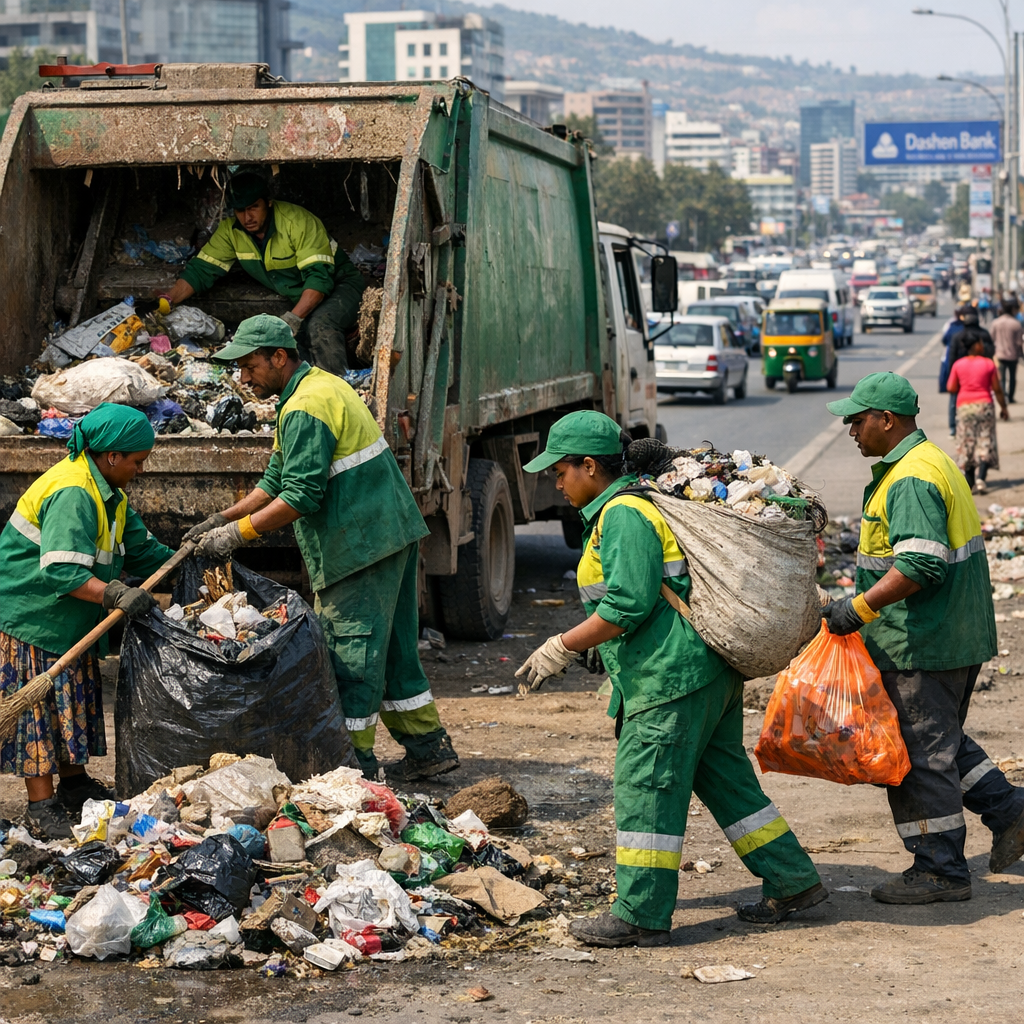
Addis Ababa has made measurable gains in its solid waste management efforts. Where pollution once clogged riverbanks, integrated waste collection, recycling, and riverside development projects have reclaimed natural watercourses as healthier public spaces. Green coverage across the city has risen dramatically—from just over 2% to nearly a quarter of urban land—showing what’s possible when environmental restoration and public planning work together. While over five million tons of waste have been retrieved citywide, nearly 500,000 tons have now been processed and reused, contributing toward cleaner air, soil, and water.
Though progress is visible, challenges remain. Not all neighborhoods benefit equally from collection services; some lack access to drop-off centers or adequate disposal infrastructure. Budget constraints and gaps in data—especially around plastic and hazardous waste—still hamper fully coordinated and sustainable systems.
What’s Needed Next
- Expand recycling associations to underserved parts of the city.
- Develop citywide waste characterisation data to guide policy.
- Encourage community-level campaigns to build lasting habits around reuse, separation, and litter control.
Transportation Reimagined: More Buses, Fewer Delays
Public transportation in Addis Ababa is also being overhauled. The city now operates over 1,600 government buses, up from far fewer in past years. These reforms serve more than four million riders daily through buses, light rail transit (LRT), minibuses, and express routes. New terminals, depots, and loading bays have eased congestion, while digital tools—license systems, vehicle registration, fine payment—have streamlined how the transport sector operates.
Still, many roads are overcrowded, and pedestrian and bike infrastructure remains underdeveloped in parts of the city. While the administration pushes forward with transit-oriented development—especially around LRT stations—commuting times and traffic jams continue to affect residents’ quality of life.
Steps Toward Better Mobility
- Complete planned Bus Rapid Transit (BRT) corridors to connect neighborhoods more directly.
- Invest in safe walking paths, crossings, and cycling infrastructure across all districts.
- Prioritize maintenance of existing roads and public transport vehicles so gains aren’t lost to wear and neglect.
Everyday Impact: Why These Reforms Matter
For the resident of Addis Ababa, these policy shifts are more than statistics—they are about walking to schools and shops without wading through waste, breathing cleaner air, and catching buses that arrive on schedule. They mean neighborhoods feeling safer, public spaces more welcoming, and public transport that people trust.
In short, building lasting change in waste and transit systems is helping move Addis Ababa closer to becoming the livable, resilient capital many want. The work is far from done—but the direction is clear.