

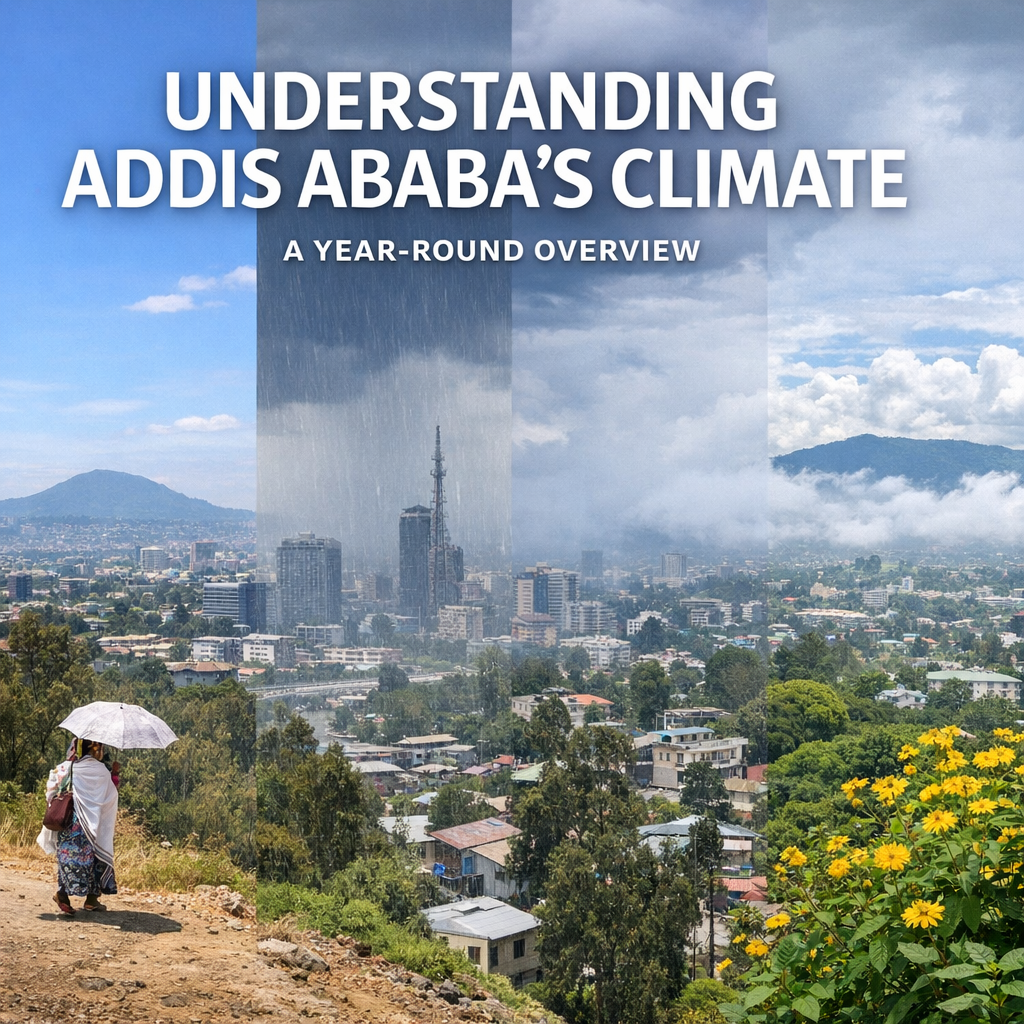
Addis Ababa, Ethiopia’s capital, boasts a subtropical highland climate, characterized by mild temperatures and distinct wet and dry seasons. Situated at an elevation of approximately 2,400 meters above sea level, the city’s altitude significantly influences its weather patterns, resulting in a comfortable climate year-round.
Temperature Patterns
Throughout the year, Addis Ababa experiences relatively stable temperatures. Average daily highs range from 21°C (69°F) in July to 25°C (77°F) in March, while nighttime lows typically fall between 7°C (45°F) and 12°C (54°F). This consistency makes the city one of the world’s most thermally stable capitals.
Rainfall and Seasons
The city’s rainfall is divided into two main seasons:
- Minor Rainy Season (Belg): Occurring from February to May, this period sees increasing rainfall, with April and May receiving moderate precipitation.
- Major Rainy Season (Kiremt): Spanning June to September, this season brings heavy, sustained rainfall, particularly in July and August, each averaging over 250 mm.
The remaining months, October through January, constitute the dry season, offering minimal rainfall and abundant sunshine.
Environmental Considerations
Despite its favorable climate, Addis Ababa faces environmental challenges. Rapid urbanization has led to deforestation and ecological degradation. Additionally, air quality concerns have arisen due to factors such as vehicle emissions and industrial activities.
Understanding Addis Ababa’s climate is essential for residents and visitors alike, as it influences daily activities, agricultural practices, and overall quality of life in the city.